Views: 179 Author: Site Editor Publish Time: 2025-09-01 Origin: Site
Nitrogen springs are a specialized type of industrial spring that utilize compressed nitrogen gas as the energy storage medium rather than conventional coiled metal. They are widely recognized in precision manufacturing industries such as stamping, die-casting, and mold making for their ability to deliver consistent, high-pressure force over a long stroke. Unlike mechanical coil springs, which rely solely on the elastic deformation of steel, nitrogen springs store energy in compressed nitrogen gas contained within a sealed, high-strength cylinder. When the spring is compressed, the nitrogen gas inside is further pressurized, creating a highly controlled and predictable return force. This results in exceptional performance consistency and a longer service life, even under demanding conditions. Nitrogen springs are engineered to withstand repeated high-load cycles without significant loss of force, making them an optimal solution in environments where precision, reliability, and durability are essential.
The fundamental principle behind a nitrogen spring is rooted in gas laws. Nitrogen, an inert and non-reactive gas, is chosen because it maintains stable pressure characteristics over time and is less susceptible to temperature fluctuations compared to other gases. Inside the cylinder, the nitrogen is hermetically sealed to prevent leakage, and the spring’s internal piston movement is guided by precision-machined components. When force is applied to the piston, the nitrogen is compressed, generating a proportional counterforce. Upon release, the gas expands, pushing the piston back to its original position. This controlled motion is critical in manufacturing processes where uniform pressure is essential to avoid defects in the final product. Additionally, nitrogen springs offer the advantage of adjustable force—by regulating the internal nitrogen pressure, manufacturers can fine-tune performance without physically changing the spring’s dimensions or materials.
From a maintenance perspective, nitrogen springs are also advantageous. Their sealed design minimizes contamination risks from dust, oil, or moisture, and they require less frequent servicing than mechanical springs. Furthermore, their compact design allows engineers to integrate them into tooling systems without significantly increasing the size or weight of the assembly. This versatility has made nitrogen springs indispensable in modern industrial tooling applications, where space efficiency and performance are equally important.

At their core, nitrogen springs are high-pressure gas cylinders equipped with precision-engineered pistons. The internal chamber is filled with nitrogen gas at a predetermined pressure. When external force—such as the downward motion of a stamping press—is applied, the piston moves into the chamber, compressing the gas. The compression increases the internal gas pressure according to Boyle’s Law, which states that the pressure of a gas increases as its volume decreases. This increase in pressure is directly proportional to the force exerted by the spring during its return stroke.
The design of nitrogen springs typically includes several critical components: a high-strength cylinder body, a piston rod, guiding bushings, sealing elements, and a gas valve. The sealing system is particularly important, as it must prevent nitrogen leakage under high pressure while allowing smooth piston movement. Many nitrogen springs are designed with micro-finished surfaces and hardened components to minimize friction, ensuring long service life and consistent force output. Because nitrogen springs operate without metal-to-metal contact in the load-bearing mechanism, they can withstand millions of cycles without significant wear, as long as the seals remain intact.
One of the most significant advantages of nitrogen springs is the uniformity of force throughout the stroke. Mechanical springs often exhibit force curves that vary significantly between their compressed and uncompressed states, leading to inconsistent results in manufacturing. In contrast, nitrogen springs maintain a nearly linear force profile, which is crucial for operations such as sheet metal forming, where precision and repeatability are non-negotiable. Engineers can also adjust the precharge pressure using specialized equipment, enabling custom force settings for different applications without replacing the spring.
To further enhance performance, some nitrogen springs incorporate advanced safety features, such as overstroke protection, pressure relief systems, and internal guiding to prevent side loading. These features not only improve operational safety but also reduce the risk of premature component failure. In high-volume manufacturing environments, this reliability translates directly into reduced downtime and improved productivity.
The decision to use nitrogen springs over traditional coil springs is often driven by performance requirements, longevity, and operational safety. One of the most prominent advantages is their high force capacity in a compact size. For example, a nitrogen spring of similar dimensions to a coil spring can deliver significantly higher forces, making it possible to achieve the same result with fewer springs or in smaller tooling spaces. This space efficiency is a key consideration in modern production lines where equipment footprint must be minimized without compromising performance.
Another advantage is the precision of force output. Mechanical springs naturally lose some of their elasticity over time due to material fatigue, resulting in inconsistent performance. In contrast, nitrogen springs rely on the stable compressibility of gas, which allows them to maintain consistent force over an extended lifespan. This consistency directly improves the quality of manufactured parts by reducing variability during production.
Adjustability is another critical benefit. In many cases, engineers can modify the internal nitrogen pressure to change the spring force without physically altering the tooling. This flexibility reduces downtime when switching between product designs and allows for quick adaptation to new production requirements. Additionally, nitrogen springs generally require less maintenance than their mechanical counterparts. The sealed design keeps out contaminants and reduces the risk of corrosion, while the smooth piston movement minimizes wear.
From a safety standpoint, nitrogen springs are equipped with built-in safeguards to prevent over-pressurization or over-stroking, which could otherwise damage the tooling or cause injury. These safety features make nitrogen springs a preferred choice in high-speed, high-force industrial applications where both operator safety and equipment integrity are paramount.
Nitrogen springs have a broad range of applications across manufacturing industries, with stamping and die-casting being the most prominent. In metal stamping, nitrogen springs are often used in die sets to provide uniform pressure during the forming process. This ensures that sheet metal parts are shaped accurately without wrinkles or distortions. Because nitrogen springs can be customized in terms of force and size, they are ideal for complex tooling where precision is critical.
In die-casting, nitrogen springs provide consistent ejection force for removing cast parts from molds. The controlled motion prevents part damage and reduces wear on the mold components, ultimately extending tool life. Nitrogen springs are also used in plastic injection molding, where they help in part ejection and mold separation with smooth, controlled force.
Beyond these sectors, nitrogen springs are found in press brakes, clamping systems, and automated assembly equipment. Their high force density and adjustable performance make them suitable for a variety of mechanical operations where traditional springs would be too bulky or lack the necessary force output. The table below outlines typical nitrogen spring applications and their corresponding benefits:
| Application | Function | Key Benefit |
|---|---|---|
| Metal Stamping | Provides forming pressure in dies | Consistent shaping without defects |
| Die-Casting | Ejects cast parts from molds | Prevents part damage and mold wear |
| Injection Molding | Assists in mold separation | Smooth ejection and longer mold life |
| Press Brakes | Supports bending operations | Uniform bending force |
| Clamping Systems | Maintains holding force | Secure workpiece positioning |
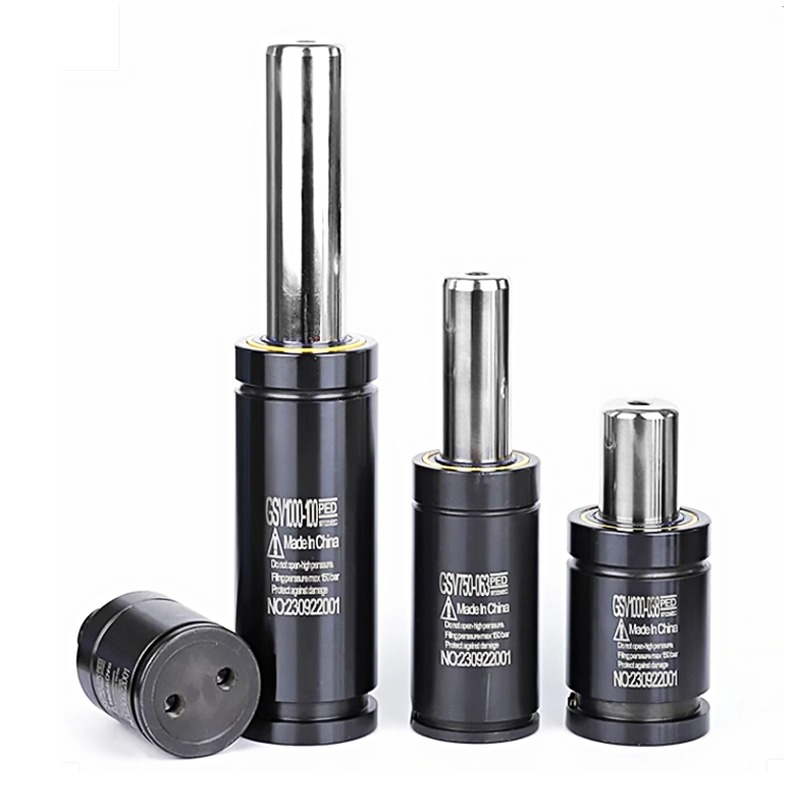
Choosing the right nitrogen spring requires careful consideration of several factors, including force capacity, stroke length, mounting configuration, and operational environment. The force capacity must match the specific application requirements, taking into account not only the initial load but also the operational cycles and potential safety margins. Stroke length is another critical parameter—selecting a nitrogen spring with the appropriate stroke ensures that the spring can compress and return without overextending, which could compromise performance and longevity.
Mounting configuration also plays a role in selection. Nitrogen springs can be installed directly in the tooling or mounted externally, depending on space constraints and maintenance preferences. Environmental factors, such as exposure to high temperatures, humidity, or corrosive materials, should also be considered to ensure optimal performance and durability. For example, specialized coatings or stainless steel components may be required in harsh environments.
Proper installation and maintenance are essential for maximizing nitrogen spring life. While they require minimal servicing compared to mechanical springs, periodic inspections for seal integrity and gas pressure are recommended. Using nitrogen charging and testing equipment, operators can monitor and adjust internal pressure as needed, ensuring consistent performance throughout the spring’s service life.
Q1: How long do nitrogen springs last?
Nitrogen springs can last for millions of cycles when properly maintained. Their lifespan largely depends on operating conditions, stroke usage, and seal integrity.
Q2: Can nitrogen springs be recharged?
Yes. Most nitrogen springs are designed with gas valves that allow them to be recharged or have their pressure adjusted using specialized charging equipment.
Q3: Are nitrogen springs safe to use?
Absolutely. They are engineered with safety features such as overstroke protection and pressure relief valves to ensure safe operation under high loads.
Q4: Why is nitrogen used instead of air?
Nitrogen is inert, non-corrosive, and less affected by temperature changes, making it more stable and reliable for long-term use in high-pressure systems.
Q5: Can nitrogen springs replace all coil springs?
Not always. While they offer superior performance in many applications, some situations may still favor mechanical springs due to cost or simplicity.


