Views: 181 Author: Site Editor Publish Time: 2025-08-17 Origin: Site
Ejector pins are a critical component in the injection molding process, designed to push molded parts out of a mold once they have cooled and solidified. While they may appear simple, ejector pins are precision-engineered tools made from high-quality steel alloys to withstand extreme pressures, high temperatures, and repeated use in demanding manufacturing environments. Their importance cannot be overstated—without them, removing parts from molds would be slow, inconsistent, and potentially damaging to the final product.
In injection molding, molten plastic or other materials are injected into a mold cavity, where they cool and take shape. Once solidified, the part must be removed without causing any surface imperfections or deformation. This is where ejector pins play their role. They apply mechanical force from the mold’s moving half to the back of the molded component, ensuring a smooth and even release. Choosing the right type of ejector pin can have a direct impact on product quality, production efficiency, and mold lifespan.
In this article, we will explore the different types of ejector pins, their unique characteristics, and their applications. We will also address common FAQs to help manufacturers, engineers, and procurement specialists make informed decisions when selecting ejector pins for their specific projects.
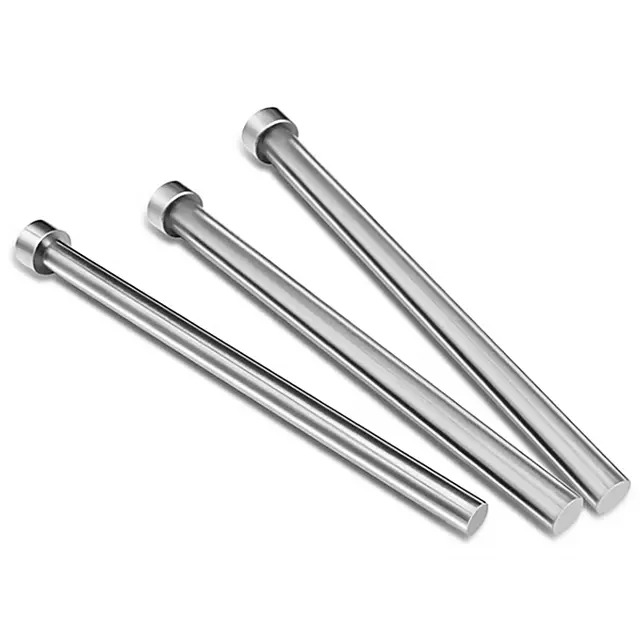
Standard ejector pins are the most commonly used type in injection molding. They feature a straight, uniform cylindrical shaft with a flat tip that directly contacts the molded part. These pins are typically manufactured from hardened tool steel, such as SKD61, to ensure durability and resistance to wear under continuous operation.
The primary advantage of standard ejector pins lies in their simplicity and versatility. They can be used in a wide range of mold designs, from simple single-cavity molds to complex multi-cavity systems. In most cases, they are positioned at strategic points in the mold to ensure even part ejection and to prevent warping or stress marks.
Standard ejector pins are particularly effective for parts with flat or slightly curved surfaces. However, they may not be suitable for extremely delicate or intricate molded components, where specialized pin tips are needed to avoid surface damage. Proper installation and maintenance are crucial—any misalignment can lead to flashing, part deformation, or even mold damage.
For high-volume manufacturing, choosing a high-quality material and proper surface treatment (such as nitriding or PVD coating) can extend the life of standard ejector pins significantly. Manufacturers should also consider the thermal expansion of pins, as mold temperature fluctuations can affect clearance and performance.
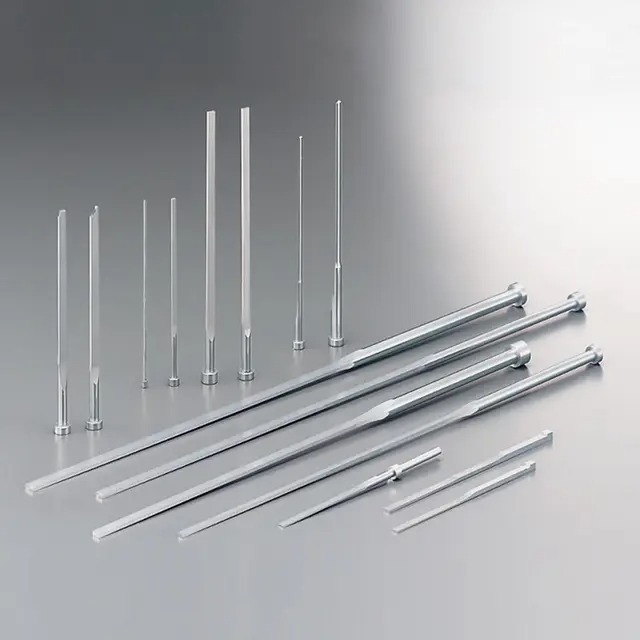
Shoulder ejector pins differ from standard pins in that they feature a “shoulder” or step-down section along their shaft. This shoulder acts as a positive stop when the pin is installed in the mold, helping to precisely control the ejection stroke and prevent over-travel.
The main benefit of shoulder ejector pins is their increased stability during the ejection process. The shoulder ensures that the pin remains properly seated and aligned, reducing the risk of bending or breakage under high ejection forces. This makes them ideal for applications involving larger or heavier molded parts, where additional support is necessary.
In addition to stability, the shoulder design can help in situations where mold wear is a concern. The shoulder serves as a mechanical reference point, preventing the pin from moving beyond its intended position, thus protecting both the mold cavity and the part surface.
When selecting shoulder ejector pins, engineers must ensure that the shoulder diameter and position match the mold’s specifications precisely. Any variation can result in improper seating, leading to production defects. These pins are available in various tip styles, including flat, radiused, or custom-formed ends, depending on the application requirements.
Step ejector pins are designed with multiple diameter changes along their length, allowing them to serve specialized ejection functions in molds with complex geometries. The stepped profile enables them to eject parts from specific features or deep cavities without interfering with other mold elements.
One of the primary applications of step ejector pins is in parts with varying wall thickness or recessed features. The step allows the pin to contact the part at an optimal point, minimizing the risk of surface marks or distortion. This is particularly useful for cosmetic parts, where surface quality is a top priority.
The stepped design also helps in reducing stress concentration on the molded part. Instead of applying ejection force across a broad, flat area, the step focuses the force where it is most effective, improving the overall ejection efficiency.
Because of their specialized nature, step ejector pins require careful design and manufacturing precision. Any deviation in dimensions can cause misalignment or part damage. In most cases, step ejector pins are custom-made to fit the mold’s exact specifications, ensuring proper engagement with the molded component.
Sleeve ejector pins, also known as tube ejectors, consist of a hollow cylindrical body that fits around a central core pin in the mold. They are commonly used for ejecting cylindrical or tubular parts, such as bottle necks, caps, or other hollow components.
The key advantage of sleeve ejector pins is that they apply ejection force evenly around the circumference of the part. This minimizes the risk of distortion or surface damage, which is critical in high-precision applications. The hollow design also allows for smooth ejection of parts with delicate edges or thin walls.
Sleeve ejector pins are often paired with core pins, which shape the interior of the molded part. During ejection, the sleeve moves forward while the core remains stationary, ensuring that the part is released without binding.
Because sleeve ejector pins involve more moving parts than standard pins, they require regular maintenance and lubrication to ensure smooth operation. They are usually made from hardened steel and may feature surface coatings to improve wear resistance and reduce friction.
Blade ejector pins, as the name suggests, have a flat, blade-like tip rather than a round one. This design is particularly useful for ejecting thin, flat, or ribbed features on molded parts. The blade’s wide surface area distributes the ejection force across a larger section, reducing the risk of part damage.
Blade ejector pins are commonly used in molds for parts with thin walls, narrow slots, or complex ribbing patterns. For example, electronic housings, automotive grilles, and intricate plastic covers often require blade ejector pins for proper ejection without warping.
One challenge with blade ejector pins is ensuring they remain perfectly aligned during operation. Misalignment can cause the blade to dig into the part or mold surface, leading to defects or costly repairs. Precision machining and tight tolerances are essential for their successful application.
Blade ejector pins are typically made from high-strength tool steel to withstand the lateral forces encountered during ejection. Like other pin types, they can be coated or treated for enhanced wear resistance.
| Ejector Pin Type | Key Features | Common Applications |
|---|---|---|
| Standard Ejector Pin | Straight cylindrical design | General-purpose ejection |
| Shoulder Ejector Pin | Built-in shoulder for positioning | Large/heavy molded parts |
| Step Ejector Pin | Multiple diameter changes | Complex geometry parts |
| Sleeve Ejector Pin | Hollow design around core pin | Cylindrical/tubular parts |
| Blade Ejector Pin | Flat blade-shaped tip | Thin or ribbed features |
Q1: What material is best for ejector pins?
High-quality tool steels like SKD61 are preferred due to their heat resistance, toughness, and wear resistance. Coatings such as TiN can further extend service life.
Q2: How often should ejector pins be replaced?
Replacement depends on production volume, material type, and maintenance practices. Regular inspections are crucial to detect wear or bending before it impacts part quality.
Q3: Can ejector pins cause defects on molded parts?
Yes, if they are misaligned, worn, or improperly sized. Correct installation, lubrication, and periodic checks minimize such risks.
Q4: Are custom ejector pins worth the investment?
For molds with unique geometries or high-value parts, custom ejector pins can significantly improve product quality and mold longevity.
Ejector pins may seem like a small detail in the complex process of injection molding, but their influence on production efficiency, part quality, and mold durability is immense. From standard and shoulder pins to more specialized designs like sleeve and blade ejector pins, each type serves a unique purpose tailored to specific part geometries and manufacturing needs.
Selecting the correct ejector pin involves considering the part’s shape, material, and surface finish requirements, as well as the operational conditions of the mold. High-quality materials, precise machining, and appropriate surface treatments ensure long service life and consistent performance.
In the world of precision molding, even the smallest components must meet exacting standards—and ejector pins are no exception. By understanding their different types and applications, manufacturers can make informed decisions that enhance productivity, reduce defects, and extend the lifespan of their tooling.


