Views: 215 Author: Site Editor Publish Time: 2025-09-04 Origin: Site
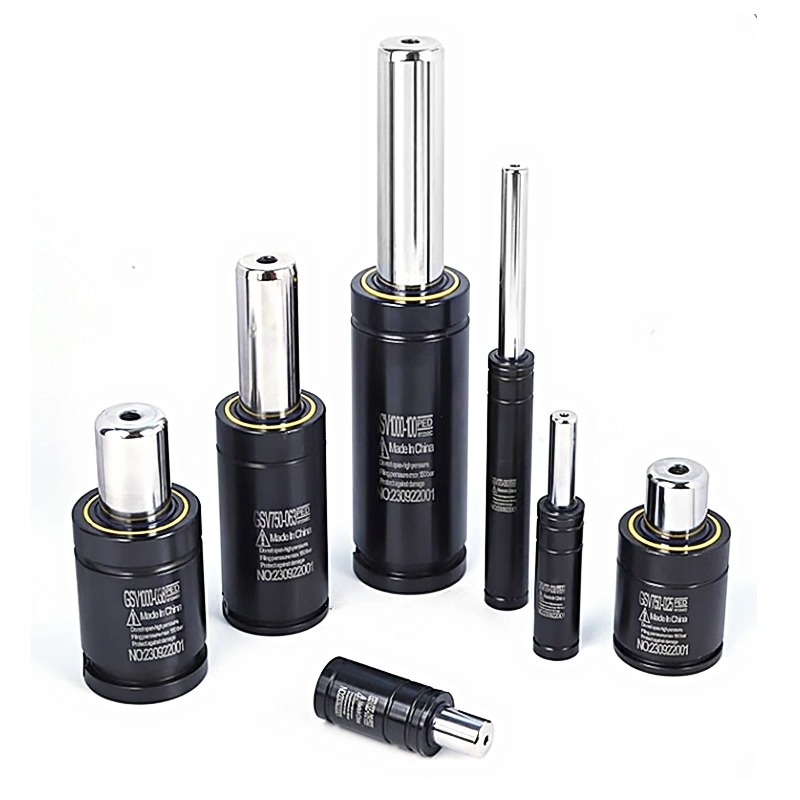
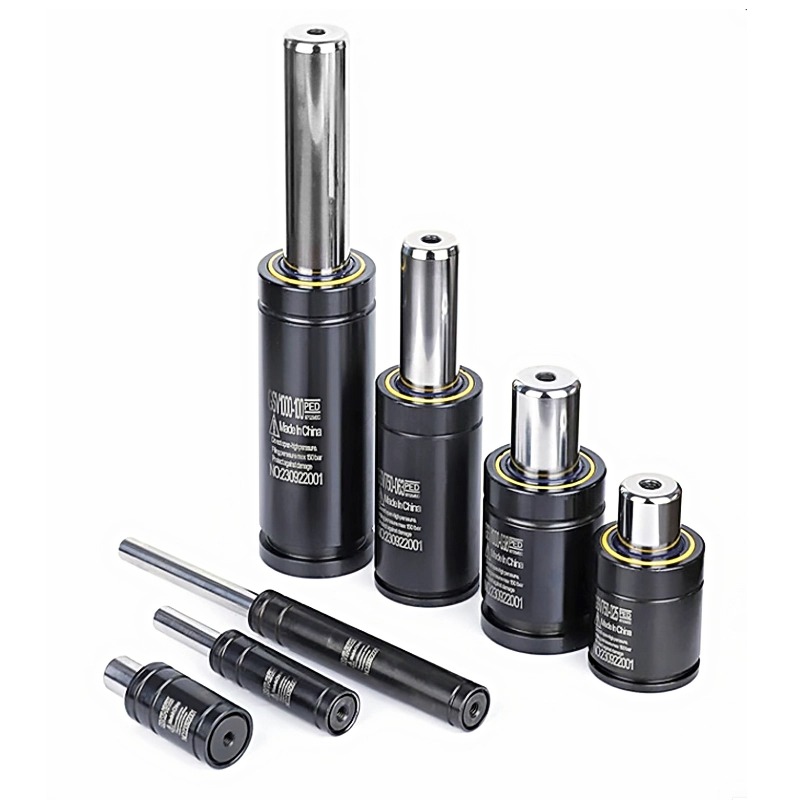
A nitrogen spring is a high-pressure device that uses compressed nitrogen gas as the energy source to provide consistent and powerful force in mechanical operations. Unlike traditional coil springs made of steel, nitrogen springs operate on the principle of gas compression rather than material deformation. They are widely used in applications such as stamping molds, die casting, injection molding, and high-precision mechanical presses.
The main advantage of a nitrogen spring lies in its ability to deliver a high force output in a relatively compact size. For example, a nitrogen spring of the same size as a coil spring can often produce several times the force. Moreover, the force remains consistent throughout the stroke, which is beneficial for processes requiring precise pressure control. Coil springs, on the other hand, tend to lose force gradually as they compress, and their force output depends on the stiffness of the metal wire used.
Nitrogen springs are also less prone to fatigue failure compared to coil springs, especially under high load and high-cycle conditions. In industrial tooling, reliability and long service life are critical. Nitrogen springs are sealed systems, reducing exposure to dust, dirt, and other contaminants that can affect performance. With proper maintenance and correct operating parameters, they can last millions of cycles without significant force loss.
However, the question arises: can nitrogen springs replace all coil springs? The answer requires analyzing the performance differences, cost implications, safety factors, and application-specific requirements. The answer is not simply “yes” or “no”—it depends on various engineering considerations, which we will explore in detail.
When comparing nitrogen springs and coil springs, the most immediate difference is the force-to-size ratio. Nitrogen springs can deliver high force in a smaller space, which is advantageous in applications where space is limited. Coil springs require more space to achieve the same force, often leading to heavier and bulkier tooling designs.
The force curve is another distinguishing factor. Coil springs exhibit a linear force increase as they compress, meaning the more they are compressed, the harder they push back. Nitrogen springs, however, can be designed to maintain a nearly constant force throughout their working stroke, which is essential for processes like sheet metal forming where uniform pressure is critical to avoid material defects.
From a fatigue perspective, coil springs can experience metal fatigue after repeated loading cycles, leading to gradual loss of force or sudden breakage. Nitrogen springs are not immune to wear, but their wear mechanism is different—primarily involving seal degradation or gas leakage, which can be detected and addressed through maintenance before complete failure occurs.
That said, nitrogen springs require specialized handling. Over-pressurization, improper installation, or lack of maintenance can lead to reduced performance or safety hazards. In contrast, coil springs are simpler to install and require no gas charging system, making them more straightforward in less demanding environments.
| Feature | Nitrogen Spring | Coil Spring |
|---|---|---|
| Force-to-size ratio | High | Moderate |
| Force consistency | Constant or near-constant | Linear increase |
| Fatigue resistance | Excellent | Good but susceptible to metal fatigue |
| Maintenance needs | Periodic inspection and recharge | Minimal |
| Space requirements | Compact | Larger |
| Safety considerations | Requires pressure control | Minimal risk |
Nitrogen springs are particularly valuable in high-force, precision applications. In stamping and forming operations, consistent pressure ensures accurate part dimensions and surface finish. Because nitrogen springs can be tailored to specific force requirements, tool designers have greater flexibility in creating compact, high-performance dies.
In die casting molds, nitrogen springs provide reliable ejection force without the bulk of multiple coil springs. This helps reduce mold size, making it easier to integrate into automated production lines. Additionally, nitrogen springs operate quietly compared to the mechanical “snap” of coil springs under high load.
Their durability in high-cycle production environments is another major advantage. Industries producing automotive body panels, for example, often run presses at high speeds for extended periods. Here, nitrogen springs’ resistance to fatigue and their ability to maintain consistent force over millions of cycles can translate into reduced downtime and maintenance costs.
While nitrogen springs have clear advantages, they cannot universally replace all coil springs. Some limitations include:
Cost – Nitrogen springs are significantly more expensive than coil springs due to their precision manufacturing, sealing systems, and gas charging requirements.
Maintenance – They require periodic checks for gas pressure and seal integrity, which may not be feasible in low-budget or remote operations.
Safety Risks – A nitrogen spring under high pressure can be hazardous if damaged or improperly handled.
Application Suitability – In simple, low-force, or large-stroke applications, a coil spring might be more economical and practical.
These limitations mean that in some machinery, coil springs remain the better choice, especially where high precision and compact size are not critical factors. In heavy-duty industrial settings, nitrogen springs often complement coil springs rather than replacing them outright.
Determining whether to replace coil springs with nitrogen springs involves evaluating several factors:
Force requirements – If the application needs high force in a compact space, nitrogen springs are ideal.
Cycle life – High-cycle production favors nitrogen springs for their fatigue resistance.
Precision needs – Processes requiring consistent force throughout the stroke benefit from nitrogen springs.
Budget and maintenance capacity – If costs and maintenance resources are limited, coil springs may remain preferable.
In many cases, the decision is not absolute. A mixed approach can be employed—using nitrogen springs in critical high-force zones and coil springs in less demanding areas of the tooling. This hybrid method can balance performance, safety, and cost efficiency.
Q1: Are nitrogen springs safe to use?
Yes, provided they are installed, maintained, and operated according to manufacturer guidelines. They should never be disassembled without proper tools and training due to the stored gas pressure.
Q2: Can nitrogen springs be customized?
Yes, they can be manufactured in various force ratings, stroke lengths, and configurations to suit specific applications.
Q3: How often do nitrogen springs need maintenance?
Maintenance frequency depends on cycle rates and operating conditions but generally involves periodic pressure checks and seal inspections.
Q4: Can nitrogen springs completely replace coil springs?
Not in all cases. While they excel in high-force, space-limited, and precision applications, coil springs remain suitable for simpler, low-cost, and long-stroke uses.
Nitrogen springs bring significant advantages over coil springs in terms of force output, consistency, and durability. They are indispensable in many high-precision, high-force industrial applications where coil springs cannot deliver the same performance. However, they are not a universal replacement. Factors like cost, maintenance requirements, and specific application demands must be considered before making the switch.
In essence, nitrogen springs are a specialized engineering solution, not a one-size-fits-all replacement. Their integration into tooling and machinery should be based on detailed technical evaluation, balancing performance benefits against practical constraints.


